Sydney Bathroom Trends 2026: Warm Minimalism, Walk-In Showers and What They Really Cost
If you're planning a bathroom renovation in Sydney right now, you've probably noticed the all-white, all-gloss bathroom is losing its grip. Builders from Dee Why to Castle Hill are telling clients the same thing: homeowners want warmth, texture and a shower that doesn't feel like a hospital cubicle. The look that's replacing the stark white box is sometimes called "warm minimalism", and it's showing up in renovation briefs across the Northern Beaches, the Hills District and the inner west in roughly equal measure.
There's also a quieter shift happening behind the scenes, in the fixtures you don't necessarily notice until your water bill arrives. Sydney's renovators are being nudged toward more water-efficient showers and tapware, and that's starting to change what gets specified in 2026 bathrooms. Here's what's actually changing, and what it costs to get it right.
The colour and material shift: beige is back, but smarter
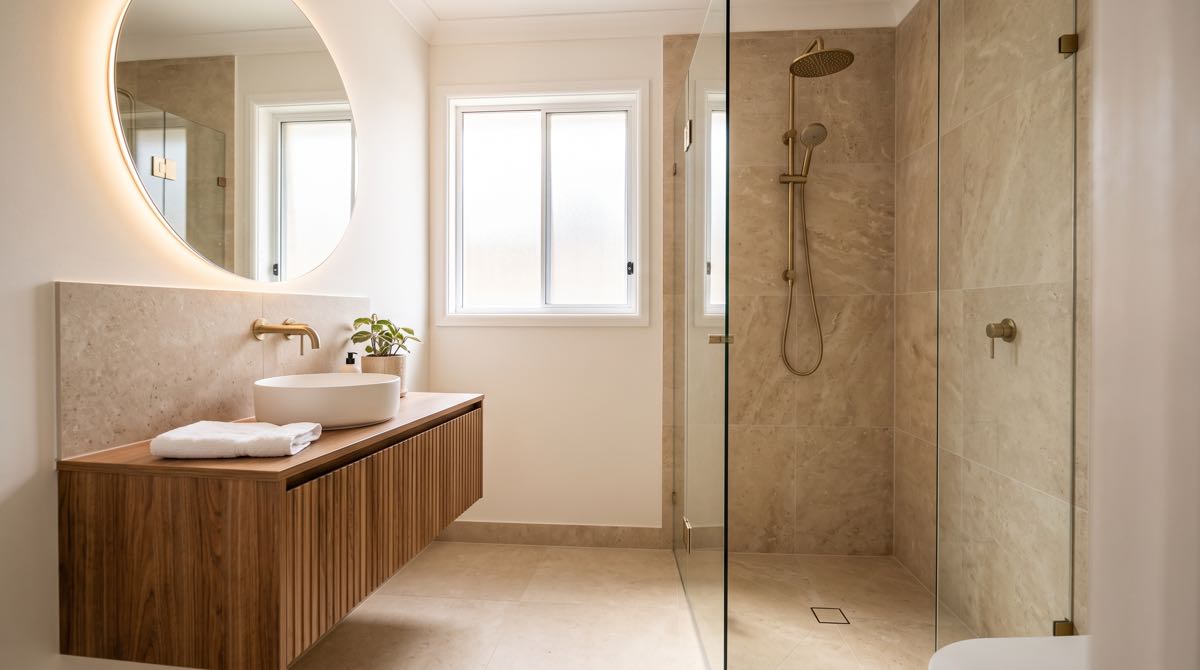
Forget the cool greys that dominated the last decade. The palette homeowners are asking for now leans toward sand, warm white, taupe and other earthy neutrals, paired with stone-look porcelain tiles that mimic travertine or marble without the maintenance headache of the real thing. Matte finishes are winning over gloss almost everywhere, from floor tiles to tapware, because they hide water spots and don't look dated the moment a new trend arrives.
Timber vanities, including fluted and timber-grain finishes, are turning up constantly in renovation photos from suburbs like Mosman and Lane Cove across our Sydney service areas, where buyers want a bathroom that reads as considered rather than catalogue-bought. Textured wall tiles in showers and feature niches add depth without shouting for attention, and brushed brass or mixed-metal tapware is still holding its own against the matte black that was everywhere a few years back—an aesthetic celebrated across our custom bathroom designs.
What this means if you're renovating
None of this is particularly expensive to chase if you plan it early. Swapping a standard gloss porcelain for a stone-look matte tile usually adds a modest premium per square metre rather than blowing out your budget, and a timber-look vanity front costs roughly the same as a painted MDF one once you're comparing like for like. The expensive mistake is choosing your tile after your waterproofing and tiling trades are already booked, because a feature wall or herringbone layout takes more cutting time and that labour cost adds up fast. Take a look at our breakdown on where the money actually goes in a Sydney bathroom renovation for budgeting advice.
Walk-in showers are now the default, not the upgrade
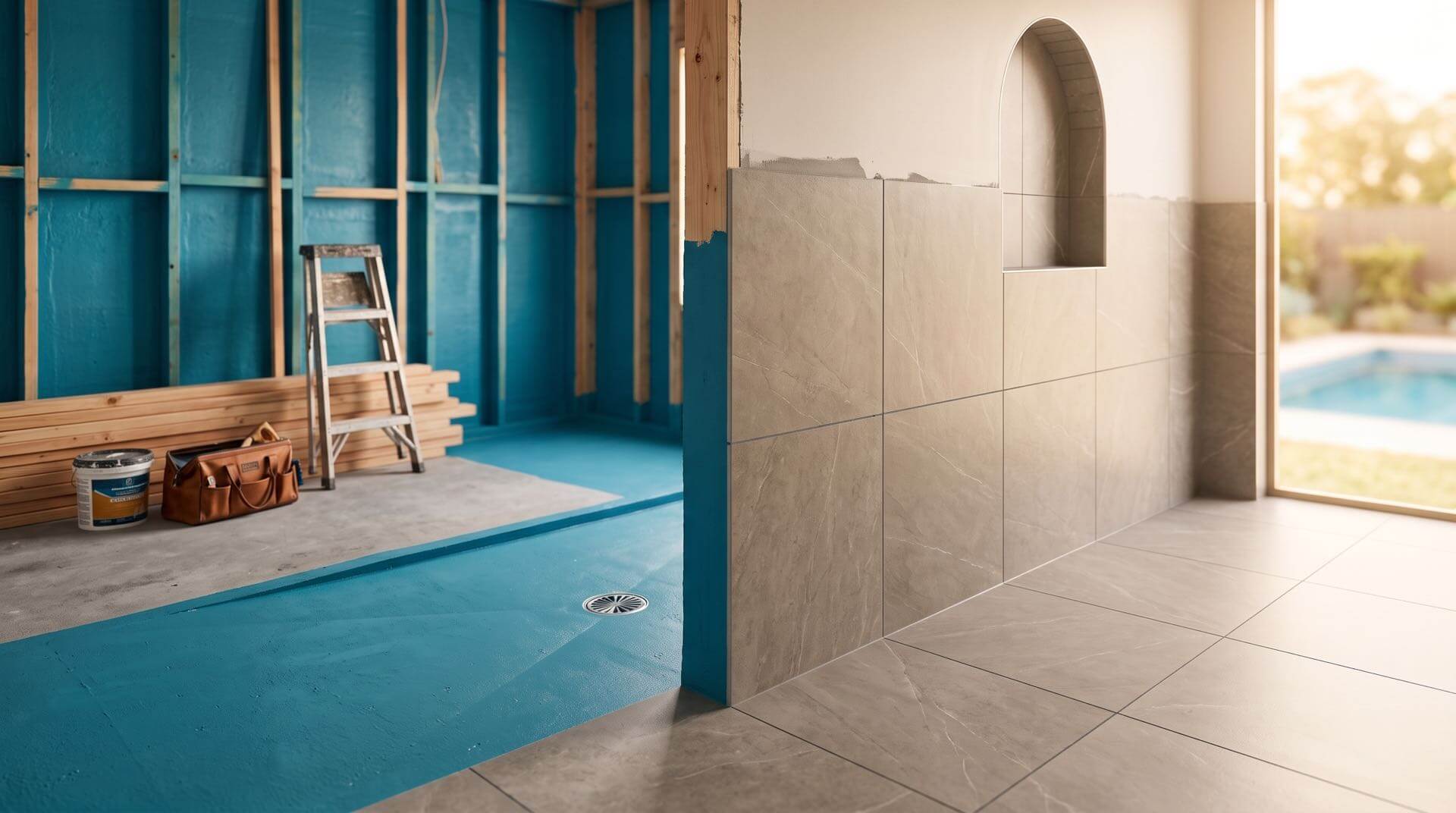
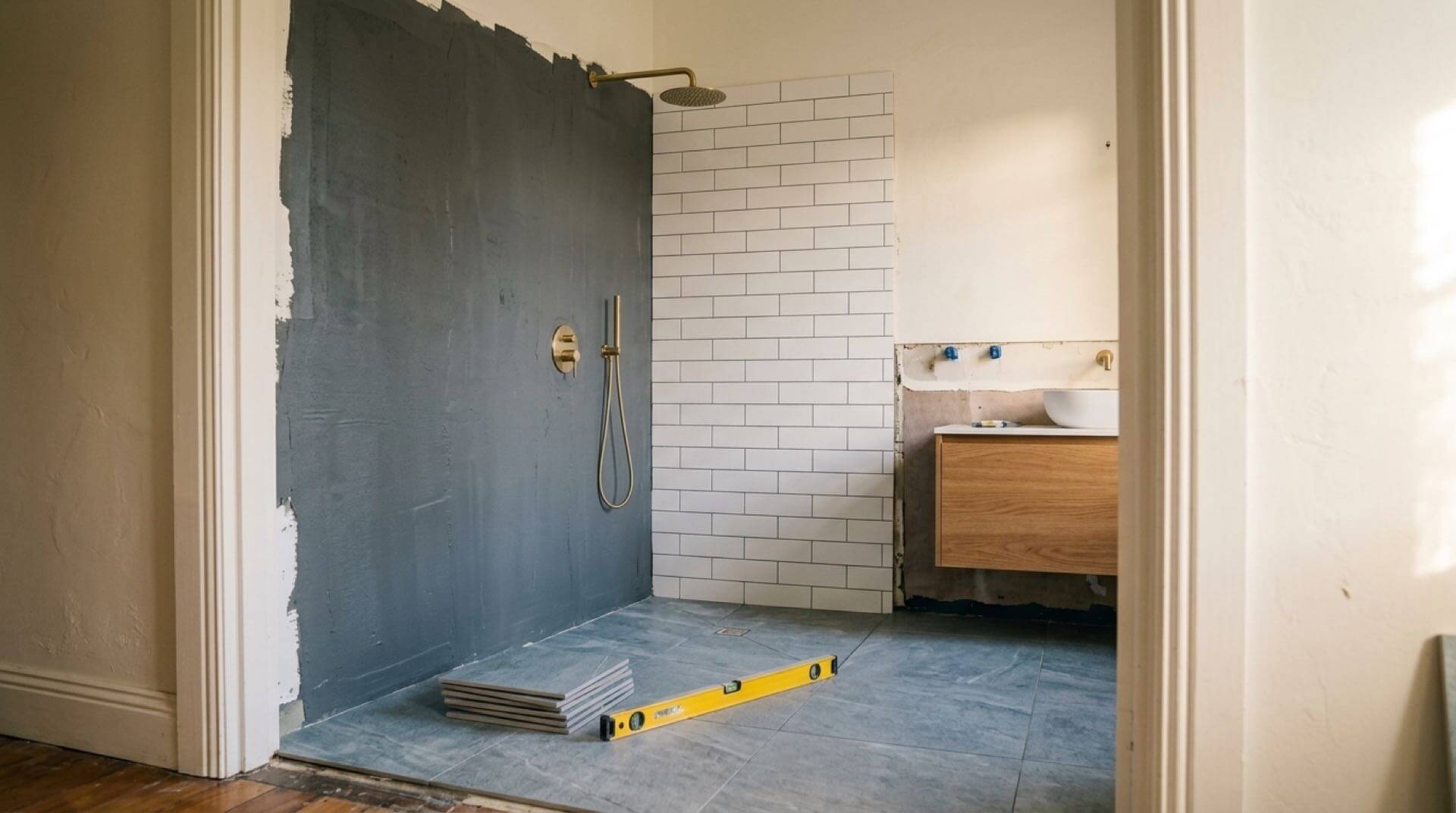
Frameless walk-in showers have officially overtaken the shower-over-bath combo as the thing most Sydney homeowners ask for first. In a renovation, walk-in shower cost in Sydney depends heavily on size, screen configuration and whether you're moving drainage, but as a rough guide a full standard bathroom renovation (including the shower, tiling, waterproofing and fixtures) typically lands somewhere between $2,300 and $4,600 per square metre once everything is finished to a mid-range standard. Waterproofing alone for an average bathroom generally runs $750 to $1,000, and that's not a line item worth cutting corners on, because a failed membrane under a frameless shower is one of the most expensive repairs in the house to fix later.
Tiling labour nationally sits somewhere between $30 and $120 per square metre depending on the tile size and pattern, with a sitewide average closer to $60. A straightforward 600x600mm tile laid in a grid pattern costs far less in labour than a herringbone or large-format stone-look tile that needs careful cutting around a frameless screen and niche—especially in space-conscious projects like small ensuite renovations.
Smart fittings are creeping into mid-range jobs, not just luxury ones
Smart toilets, touchless tapware and heated towel rails used to be reserved for the top end of the market. They're now appearing in plenty of standard renovations across Sydney, partly because the price of these fittings has come down and partly because buyers expect them. Underfloor heating is still mostly a higher-end addition showcased in our luxury bathroom renovations, but it's no longer unusual to see it specced into a $25,000 to $30,000 renovation rather than only the $40,000-plus jobs. (Read our guide on real Sydney bathroom renovation costs in 2026 for comprehensive pricing ranges).
Why water efficiency is quietly reshaping shower design
Here's the part most homeowners haven't clocked yet. Australia's WELS scheme (the Water Efficiency Labelling and Standards program) sets the minimum flow rate for showerheads, and right now that minimum is 3 stars, capped at 9 litres per minute. Following the WELS Regulator's 2025 review, released in December last year, there's a live proposal on the table to lift that minimum to 4 stars, which would cap new showerheads at 7.5 litres per minute. It hasn't become law yet, but it's the kind of change that tends to move fast once a review lands, and it's worth knowing about before you lock in your fittings.
Practically, this means it's worth choosing a 4-star or higher showerhead now rather than grabbing whatever's cheapest, especially if you're not planning to renovate again for another decade. Tapware with auto shut-off features already earns an extra WELS star, and some plumbing commentators are pushing for the same incentive to apply to timed-flow showers, which typically run for around seven seconds per activation before shutting off. None of this costs much more upfront, but it does mean reading the WELS label on the box rather than assuming every showerhead on the shelf performs the same way.
What to ask your plumber before you commit
Ask for the WELS star rating and litres-per-minute figure on paper, not just a verbal assurance. If you're in an older Sydney home on a gravity-fed system, also confirm your water pressure can actually deliver a decent shower at a lower flow rate, because an under-pressured 4-star shower feels noticeably weaker than a well-pressured 3-star one. Learn more about our licensed team and trade standards to see how our qualified trades ensure complete compliance with AS/NZS 3500 and AS 3740 regulations.
Budgeting for the trend, not just the look
The national average for a full bathroom renovation is around $26,000, according to Housing Industry Association data, though plenty of Sydney jobs come in above that once you factor in the city's labour rates and the cost of working in older terraces with access constraints. A cosmetic refresh that keeps the existing layout and plumbing can be done for $5,000 to $15,000, a standard renovation with new tiles, vanity, toilet and tapware typically runs $15,000 to $25,000, and a renovation involving a layout change and premium finishes climbs to $25,000 to $35,000 or more.
If you're chasing the warm minimalist look on a standard budget, the smartest move is to spend on the things you touch every day (tapware, the shower screen, the vanity) and save on the things nobody examines closely, like the tiles behind a vanity mirror or inside a linen cupboard. A good renovator in Parramatta or the Eastern Suburbs will tell you the same thing: the trend matters less than getting the waterproofing, the fall to the drain and the WELS-rated fittings right the first time, because redoing a bathroom twice in five years costs a lot more than getting it right once. You can see real-life examples of these finishes across Sydney in our renovation project gallery.
Whether you're in Bondi, Baulkham Hills or anywhere in between, the 2026 bathroom that actually ages well is the one built on good bones first, with the warm, textured finishes layered on top. Ready to explore ideas for your space? Contact our team today for a free consultation and quote.
Ready to get a real number for your bathroom?
Get a free, no-obligation quote based on your actual layout — not a rough estimate.